Unveiling Lassen Volcanic: Why This Hidden Gem is America's Most Underrated National Park
Welcome back to the blog! If you are anything like me, you love the majesty of America's national parks. But let us be honest for a moment: visiting some of our most famous parks during peak season can feel less like a peaceful retreat into nature and more like navigating a crowded theme park. Between trying to find parking at Yosemite, waiting in endless traffic lines at Yellowstone, and dodging selfie sticks at the Grand Canyon, finding actual solitude in the great outdoors can feel like an impossible dream. But what if I told you there is a place tucked away in Northern California that offers all the jaw-dropping geological wonders of Yellowstone, the alpine beauty of the Sierra Nevada, and a fraction of the crowds? Enter Lassen Volcanic National Park.
In this post, we are going to dive deep into what makes this volcanic wonderland such an incredible destination. From its explosive past to its bubbling hydrothermal basins and serene, crystal-clear lakes, Lassen Volcanic is a paradise waiting to be discovered. This discussion ties directly into our latest podcast episode, Lassen Volcanic: America's least visited National Park, where we explore the fascinating history and untamed beauty of this remarkable region. Whether you are planning your next weekend getaway or simply daydreaming about your future travels, grab a cup of coffee and let us explore why Lassen Volcanic deserves a spot at the very top of your bucket list.
The Explosive History of Mount Lassen and the 1915 Eruption
To truly appreciate Lassen Volcanic National Park, you have to look back at the dramatic and fiery forces that shaped it. The park is anchored by Lassen Peak, the southernmost active volcano in the Cascade Range. For centuries, the mountain slumbered peacefully, revered by the local Native American tribes, including the Atsugewi, Yana, Maidu, and Wintun peoples, who lived harmoniously in the surrounding valleys and forests.
All of that changed dramatically in May 1915. After lying dormant for what European settlers thought was forever, Mount Lassen suddenly roared back to life. The 1915 eruption was nothing short of cataclysmic. It began with massive explosions that blasted a new crater into the summit, followed days later by a devastating lateral blast and pyroclastic flow that swept down the northeastern flank of the mountain. This violent event decimated miles of pristine timber—an area now famously known as the Devastated Area—and unleashed massive mudflows, known as lahars, that rushed down into the surrounding valleys.
What makes the 1915 eruption so unique in American history is that it was meticulously documented. A local photographer and homesteader named Benjamin Loomis captured incredible images of the erupting volcano from his nearby property. Loomis dedicated much of his life to studying the volcano, educating the public, and advocating for the preservation of the landscape. Today, visitors can walk through the very landscape transformed by that eruption, witnessing firsthand the raw, untamed power of the earth. The scars of 1915 are still visible, serving as a powerful reminder that our planet is a living, breathing entity.
From Disaster to Destination: How Lassen Became a National Park
The timing of the 1915 eruption could not have been more dramatic, particularly for the nearby city of San Francisco. At the very moment Mount Lassen was blowing its top, San Francisco was proudly hosting the Panama Pacific International Exposition. This massive world's fair was designed to celebrate the completion of the Panama Canal, but it was also a triumphant statement to the global community that San Francisco had completely risen from the ashes following the catastrophic 1906 earthquake and fire.
As news and photographs of the erupting volcano traveled down the state, it completely captivated the imagination of the American public. People were simultaneously terrified and mesmerized by the unpredictable, raw power of Mother Nature playing out just a few hundred miles away from a recovering San Francisco. This sudden surge of public interest served as the catalyst for conservation efforts in the region.
Recognizing the unique scientific and aesthetic value of the volcanic landscape, conservationists and local leaders rallied to protect the area. Just one year after the cataclysmic eruption, in August 1916, President Woodrow Wilson signed the bill establishing Lassen Volcanic National Park. It was created to preserve the volcanic features for educational and scientific inspiration, ensuring that future generations could witness the aftermath of the earth's fiery fury. The park stands today as a testament to how a natural disaster can ultimately lead to the permanent protection of a breathtaking natural sanctuary.
Exploring the Hydrothermal Wonders: Bumpass Hell and Beyond
When most people think of hydrothermal features like boiling mud pots, steaming fumaroles, and vibrant sulfur springs, they immediately picture Yellowstone National Park. However, Lassen Volcanic National Park holds a wonderful secret: it is one of the only places on Earth where you can experience all four types of hydrothermal features—hot springs, mud pots, fumaroles, and boiling pools—in a single park, and usually without another soul in sight.
The crown jewel of Lassen's hydrothermal areas is Bumpass Hell. Named after Kendall Vanhook Bumpass, a 19th-century cowboy who unfortunately learned the hard way that the ground was dangerously thin when he broke through the crust and lost his leg, this basin is a sensory overload. As you hike the scenic trail down into the valley, the unmistakable scent of sulfur fills the air. Soon, you are greeted by a surreal landscape of bubbling mud pots that plop rhythmically, hissing steam vents known as roaring fumaroles, and intensely turquoise pools of boiling water.
The largest of these features is Big Boiler, a churning cauldron of superheated water that sounds like a steam locomotive. Walking along the designated boardwalks feels almost like visiting an alien planet. The vibrant yellows, oranges, and greens of the mineral deposits contrast sharply against the stark white steam and the surrounding dark volcanic rock. In addition to Bumpass Hell, visitors can explore other fascinating hydrothermal sites like Sulphur Works, which is easily accessible right from the main park road, and the steaming landscape of Devil's Kitchen. These features remind us that beneath the tranquil alpine forests and quiet lakes, Lassen is still a very much active volcanic system.
The Geology Behind the Steam
To truly understand why Lassen is bubbling and steaming, we have to look beneath the surface. The heat driving these hydrothermal features comes from a deep-seated magma chamber located miles below the earth's crust. Groundwater seeps down through fractures in the rock, where it is heated by this subterranean magma. The superheated water then rises back to the surface, dissolving minerals and creating the spectacular displays we see today at places like Bumpass Hell.
Breathtaking Landscapes: Alpine Lakes and Volcanic Peaks
While the hydrothermal features and volcanic history are incredible, Lassen Volcanic National Park offers an astonishing variety of landscapes that go far beyond rocks and steam. Because the park sits at the junction of the Cascade Range, the Sierra Nevada, and the Great Basin, it boasts a remarkably diverse ecosystem. This convergence creates a paradise for hikers, photographers, and nature enthusiasts.
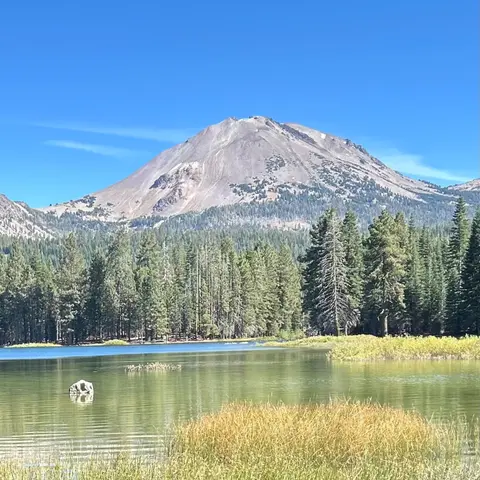
One of the defining features of the park is its abundance of pristine alpine lakes. As you drive along the Lassen Volcanic National Park Highway, you will encounter gorgeous bodies of water like Manzanita Lake, Summit Lake, and Reflection Lake. Manzanita Lake, located near the northwest entrance, is particularly famous for its mirror-like reflections of Lassen Peak on a calm morning. It is a haven for kayakers, paddleboarders, and anglers, and the surrounding campground makes it a popular basecamp for visitors.
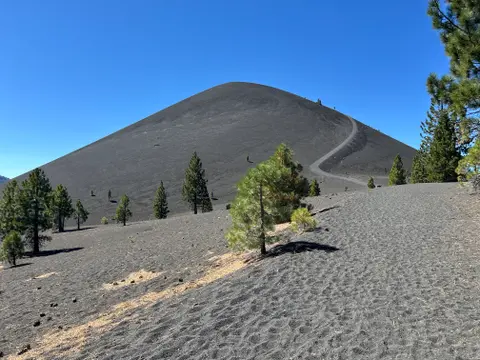
For those who love to hike, the park features over 150 miles of trails that traverse a vast spectrum of terrain. You can hike through dense evergreen forests of red fir and ponderosa pine, scramble across vast, barren fields of volcanic scree, and climb to the top of cinder cones. Speaking of cinder cones, Cinder Cone Nature Trail is one of the most unique hikes in the entire park. Climbing this steep, loose gravel trail feels a bit like walking up a giant sand dune, but the reward at the top is worth every step. You are greeted by a deep, perfectly symmetrical volcanic crater and a panoramic view of the Fantastic Lava Beds—a sea of jagged, blocky basalt lava flows that look like they belong on the moon.
Wildlife viewing is another major highlight of the park's diverse landscapes. Keep your eyes peeled for black bears, mule deer, coyotes, bald eagles, and the elusive pika darting among the rocks. In the summer months, alpine meadows burst into a riot of color with vibrant wildflowers, including lupine, paintbrush, and mountain pride, creating a stunning contrast against the dark volcanic backdrop.
Why Solitude Makes Lassen Volcanic a Must-Visit National Park
In an era where overcrowding has unfortunately become a hallmark of our most famous national parks, Lassen Volcanic offers something increasingly rare and precious: genuine solitude. Despite offering world-class geological wonders, stunning alpine scenery, and incredible recreational opportunities, Lassen consistently ranks among the least visited national parks in the United States.
Imagine hiking to the edge of a steaming hydrothermal basin and hearing nothing but the bubbling of mud pots and the wind whispering through the pines, with no crowds blocking your view or ruining the tranquility. Picture standing on the summit of Lassen Peak, looking out over a vast expanse of California wilderness where you can see for miles without spotting another human being. That is the magic of Lassen Volcanic.
This lack of crowds transforms your relationship with the park. Your visit is not rushed or stressful; you do not have to wake up at dawn just to secure a parking spot at a trailhead, and you can truly immerse yourself in the healing power of nature. Whether you are seeking a quiet weekend of introspection, an unhurried family road trip, or an authentic wilderness adventure, Lassen provides the space and peace to connect deeply with the natural world.
To hear more about the incredible history and my personal experiences exploring this magnificent landscape, be sure to check out the related podcast episode, Lassen Volcanic: America's least visited National Park.
Conclusion
Lassen Volcanic National Park is truly a hidden gem that punches well above its weight class. From its explosive, history-making eruption in 1915 that captured the attention of a recovering San Francisco to the bubbling, otherworldly wonders of Bumpass Hell, this park offers a little bit of everything for the curious traveler. Its diverse landscapes—ranging from serene alpine lakes and wildflower-filled meadows to jagged lava beds and towering volcanic peaks—provide endless opportunities for exploration.
Most importantly, Lassen offers a sanctuary of solitude in a busy world. In a time when finding peace in nature can feel challenging, this underrated national park welcomes you with open arms and quiet trails. If you are ready to experience the raw power and serene beauty of America's volcanic heartland without the massive crowds, pack your bags and set your sights on Lassen Volcanic. And before you go, don't forget to listen to the full discussion over on the podcast by visiting Lassen Volcanic: America's least visited National Park. Until next time, happy trails!

Host
Jim lived in Latin America - Ecuador, Chile and Mexico - for 7 years working in the financial services industry. But as a side interest, he was a stringer, (freelance journalist), for The Economist, the BBC, The Times and Business Latin America. Returning to San Francisco, he served as the President of the San Francisco Public Library from 1992 to 1996. The Commission runs the 27 public libraries in San Francisco, one of America's leading urban public library systems. His debut novel, a financial thriller "Deceit and Dirty Money" is available through Amazon.com. Jim is drawn to Podcasting, as the medium brings together all the traditions of writing, broadcasting, technology and marketing. Deeply committed to fostering international relations through Citizen Diplomacy, he serves as the Co-Chair and founder of the San Francisco Bangalore Sister City Committee, which links India's Silicon Valley to San Francisco. He is the Treasurer of the San Francisco Cork Sister City Committee which is one of 19 sister city relationships San Francisco has developed to foster international trade and culture.

WearIt.AI Making it easy to buy stylish clothes.